Wrestling, Waiting, and the God Who Has the Final Move
I can’t stop thinking about Jacob lately.
Even his name—heel-grabber, supplanter—tells the story. He took what wasn’t his. He manipulated. He “got ahead.” And then he lived long enough to feel what that kind of living feels like when it comes back around (Genesis 25–27).
Because what hits me is how God uses Jacob’s journey to expose Jacob to Jacob.
Jacob deceives… and then Laban deceives him. Jacob bargains… and then he’s bargained with. Jacob grasps… and then he’s grasped. It’s like the Lord is holding up a mirror—not to shame him, but to transform him. Consequences aren’t God “getting even.” Sometimes they’re God getting us free—letting us see what our choices produce so He can heal and refine what’s in us (Hebrews 12:6).
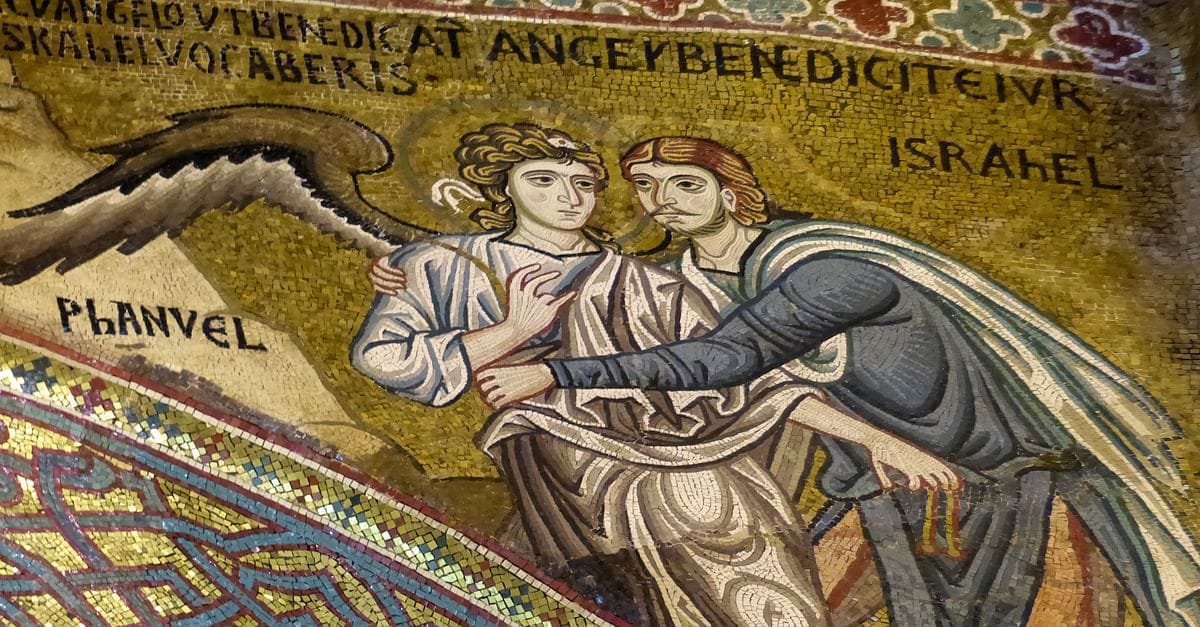
And of course, there’s the wrestling. Jacob clinging to the angel of the Lord, refusing to let go until he’s blessed (Genesis 32). I’ve read that so many times, but it feels different now: it’s the picture of a man finally done striving in his own strength—desperate for God to do what only God can do.
And honestly… that wrestling season is what standing feels like.
Standing for your marriage can feel like living in Genesis 32—when you’re doing your best to obey God, but you don’t know what tomorrow holds. You’re praying. Waiting. Hoping. Sometimes trembling. Sometimes limping. Sometimes just trying to make it through another day with your heart intact. You’re not in control of the other person’s choices, but you are choosing faithfulness in your own heart. And that is not small. That is costly. That is holy.
But what I somehow missed for so long is the moment when Jacob goes to meet Esau.
Jacob is terrified. He doesn’t know if his brother is going to kill him. He’s bringing his whole family into this moment, and you know his kids felt that fear too. And there’s little Joseph—watching it all. Watching the tension. Watching the unknown. Watching his father brace for revenge.
And then… Esau runs to him. Embraces him. Weeps. Forgives him (Genesis 33).
That detail wrecked me this morning.
Because picture it: little Joseph watching his father prepare for what he’s convinced is going to be terrible. He’s watching Jacob’s fear. Watching the careful positioning of the family. Watching a dad bracing for revenge and trying to protect everyone he loves.
And then Joseph gets to witness something completely different.
He watches forgiveness.
He watches love.
He watches two brothers come back together.
He watches a family moment that could’ve ended in bloodshed become a moment of mercy.
It’s redemption in real time.
And that’s what gets me: when we’re reading it, we don’t fully understand it yet. But God was already planting something. This moment became a memory Joseph could recall later—when he’d need courage to forgive, strength to bless, and grace to reunite what was broken.
Because Joseph would later have his own “Esau moment.” After betrayal, after loss, after injustice—Joseph would stand in the position of power, face-to-face with the ones who wounded him, and he would choose mercy. He would feed them. He would forgive them. He would preserve the family line. He would literally save the house of Israel (Genesis 45–47).
Do you see it? God changed Jacob’s name from Jacob to Israel—and years later, Joseph would literally save the house of Israel. The same Joseph who watched forgiveness happen in front of him as a child would one day become the instrument God used to preserve that very family line.
The setup is breathtaking.
It’s like the Lord is playing the most phenomenal chess game—and I love this because it’s true in more ways than we realize:
The King cannot be taken.
The King is never captured.
The King has the final move.
God is never in checkmate.
He declares the end from the beginning (Isaiah 46:10). He’s working all things together for good (Romans 8:28). And what the enemy means for evil, God can turn for good—into salvation, into provision, into healing (Genesis 50:20).
And honestly… when I look at that story, I can’t help but look at my own.
God knows the beginning and the end, and sometimes I replay my life and wonder why things happened the way they did. Why certain betrayals were allowed. Why certain wounds cut so deep. Why some seasons felt like loss on top of loss. But the longer I walk with Him, the more I see that God doesn’t waste anything—He uses everything. He finishes what He starts (Philippians 1:6). He has written days I can’t yet understand (Psalm 139:16).
And forgiveness… it sounds so simple until you’re the one who has to do it.
I’ve struggled with it at times. I’ve felt anger, bitterness, hurt, betrayal—real emotions that don’t just disappear because someone tells you to “forgive and move on.” But what I’ve learned is this: when I released forgiveness, God released me. He didn’t just free the other person from my judgment—He freed my heart from the prison of bitterness. He healed places I didn’t even realize were still bleeding. Love covers, endures, and refuses to keep wounds as weapons (1 Corinthians 13:7).
And if I’m honest, depending on the season, I’ve been able to relate to different people in this story.
I’ve felt like Esau.
And I’ve also had to face the truth that there were moments I acted like Jacob.
I’ve been Joseph—misunderstood, wounded, trying to stay faithful.
And I’ve had to admit I’ve also been like Joseph’s brothers—messy, imperfect, reacting out of fear, pride, and pain.
But the thread that holds the whole story together is the same thread that holds our stories together: forgiveness, love, and a God who orchestrates everything—and who stays close enough to heal us, transform us, and make something holy out of what hurt.
Sometimes I don’t see what God is doing. Sometimes my spouse’s heart looks hard, and everything in me wants to panic. But I know the character of God. I know He hears my prayers. I know He is faithful—even when I can’t trace His hand. So I choose to stay with God.
And when the enemy tries to remind me of fear, I answer it with faith. I don’t partner with anxiety; I partner with the Lord. I practice my faith in the waiting—because “if we hope for what we do not see, we wait with perseverance” (Romans 8:25). I keep showing up in prayer, in surrender, in obedience—like Jacob on the night before the meeting. Jacob didn’t know how Esau would respond… but he still walked forward with God.
So that’s what I’m doing. I’m waiting for my “Genesis 33 moment.” I’m trusting God for the day when what I’ve feared becomes what only God can do—when my spouse, like Esau, comes back not with revenge, but with love. And while I wait, I hold onto this promise: “No weapon formed against you shall prosper” (Isaiah 54:17). Even if the timeline is longer than I want, I’m choosing to believe this: the King has the final move, and God is never in checkmate.
Lord, You never cease to amaze me. You are in the details. You orchestrate what I can’t see. You teach us Your heart through Your Word. And You make me so hungry for more of You—more of Your character, more of Your ways, more of Your love.
Praise God. 🙏
--
by ChristyH.